
Hybrid Mobile Game Monetization for Game Publishers Is a Must
Discover why hybrid mobile game monetization strategies are crucial for game publishers to maximize revenue. Learn how to implement them effectively here!
Hybrid Mobile Game Monetization for Game Publishers Is a Must
In the rapidly evolving landscape of mobile gaming, publishers are continually exploring innovative monetization strategies that not only generate revenue but also enhance player engagement.
One such strategy gaining prominence is the integration of rewarded surveys. This approach offers a symbiotic relationship between developers and players, providing value to both parties.
In this comprehensive article, we will delve into how mobile game publishers can effectively monetize with surveys and explore various use cases that demonstrate their potential.
The Evolution of Mobile Game Monetization

The mobile gaming industry has witnessed exponential growth over the past decade, leading to a diverse array of monetization models.
Understanding these models is crucial for publishers aiming to implement effective strategies.
Traditional Monetization Models
-
In-App Purchases (IAPs): Players purchase virtual goods, such as power-ups, skins, or currency, enhancing their gaming experience. This model caters to a segment of players willing to spend money to progress or customize their gameplay.
-
In-App Advertising (IAA): Games display advertisements, including banners, interstitials, or videos, generating revenue based on impressions or clicks. While this approach monetizes non-paying users, it can disrupt the gaming experience if not implemented thoughtfully.
-
Paid Downloads: Players pay an upfront fee to download and play the game. This model has become less prevalent with the rise of free-to-play games but is still viable for certain niches.
-
Subscriptions: Offering players access to exclusive content or benefits for a recurring fee. This model ensures a steady revenue stream and fosters long-term player commitment.
The Shift Towards Hybrid Monetization
To maximize revenue and cater to diverse player preferences, many publishers are adopting hybrid monetization strategies.
This approach combines multiple models, such as integrating both IAPs and IAA, to appeal to a broader audience.
For instance, a game might offer in-app purchases for premium items while displaying ads to non-paying users, ensuring monetization across the board.
Introducing Rewarded Surveys as a Monetization Strategy
Rewarded surveys have emerged as a compelling addition to the monetization toolkit for mobile game publishers.
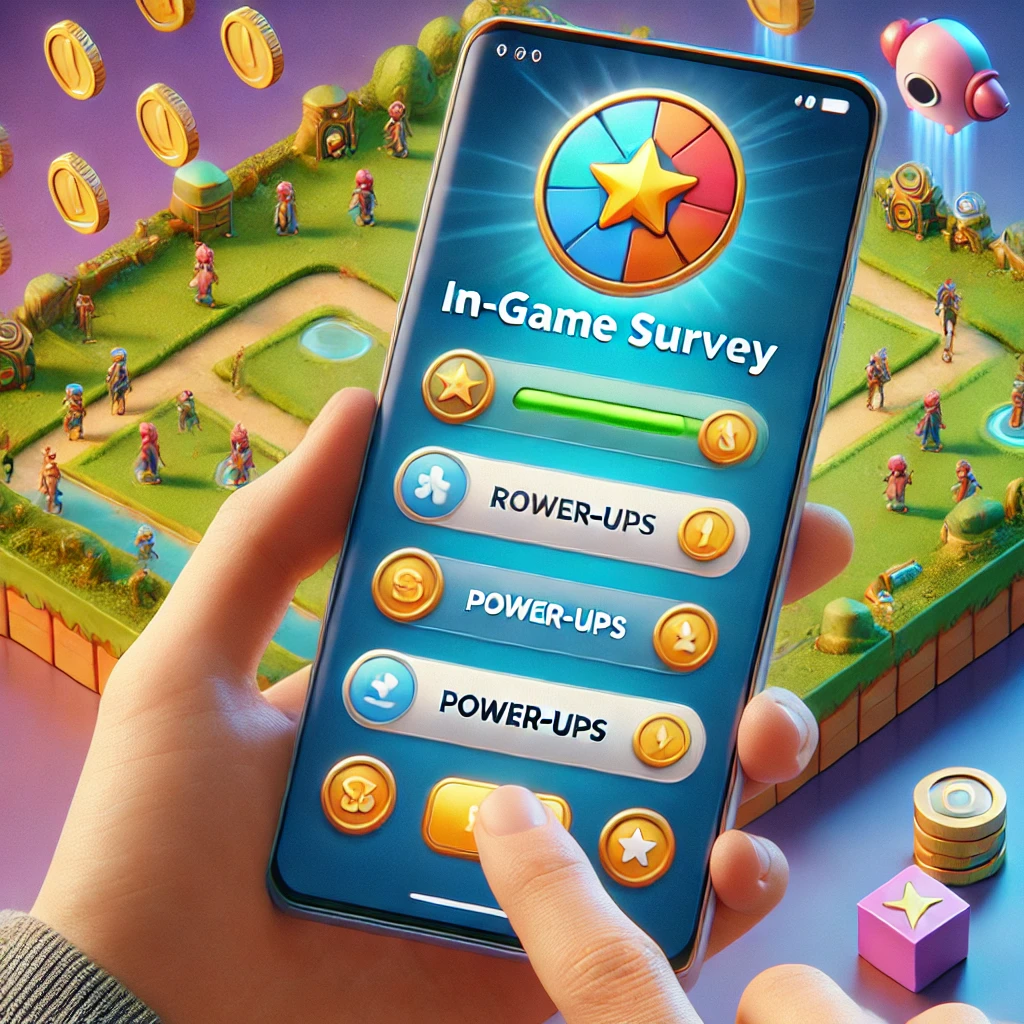
This model allows players to participate in surveys in exchange for in-game rewards, such as currency, items, or other benefits.
It presents a non-intrusive and engaging way to generate revenue while offering players an alternative means to earn rewards without spending real money.
Benefits of Rewarded Surveys
-
Enhanced Player Engagement: By providing players with the opportunity to earn rewards through surveys, publishers can increase engagement and retention rates. Players are more likely to continue playing when they have alternative avenues to gain in-game benefits.
-
Diversified Revenue Streams: Rewarded surveys offer an additional revenue channel beyond traditional methods. This diversification can lead to increased overall earnings and reduce reliance on a single monetization model.
-
Improved User Experience: Unlike some ad formats that may disrupt gameplay, surveys are typically optional and can be completed at the player's convenience, leading to a more positive user experience.
-
Valuable Player Insights: Surveys can provide publishers with direct feedback from players, offering insights into player preferences, behaviors, and satisfaction levels, which can inform future game development and marketing strategies.
Implementing Rewarded Surveys: Best Practices
To effectively integrate rewarded surveys into a mobile game, publishers should consider the following best practices:
-
Seamless Integration: Ensure that surveys are integrated smoothly into the game's interface, allowing players to access them without disrupting their gaming experience.
-
Relevant Rewards: Offer rewards that are valuable and relevant to the players. This could include in-game currency, exclusive items, or other incentives that enhance the gaming experience.
-
Clear Communication: Clearly communicate the availability of surveys and the rewards associated with them. Transparency encourages participation and builds trust with the player base.
-
Optimal Timing: Present survey opportunities at appropriate times, such as after completing a level or during natural breaks in gameplay, to avoid interrupting the player's immersion.
-
Data Privacy Compliance: Ensure that all surveys comply with data protection regulations and that players' privacy is respected. Clearly inform players about data usage and obtain necessary consents.
Use Cases of Rewarded Surveys in Mobile Games
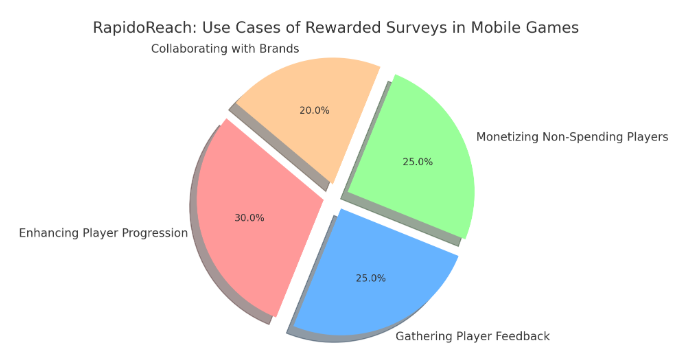
To illustrate the effectiveness of rewarded surveys, let's explore several use cases where this monetization strategy has been successfully implemented:
Case Study 1: Enhancing Player Progression
A popular puzzle game faced challenges with player retention, as many users struggled to progress past certain levels without making in-app purchases.
To address this, the publisher introduced rewarded surveys, allowing players to earn hints and power-ups by completing surveys.
This approach led to increased player retention and satisfaction, as players could overcome challenging levels without spending real money.
Case Study 2: Gathering Player Feedback
A mobile RPG game sought to understand player preferences regarding upcoming features and content. By integrating rewarded surveys, the publisher collected valuable feedback directly from the player base.
Players felt their opinions were valued, leading to increased loyalty, while the publisher gained insights to guide future updates.
Case Study 3: Monetizing Non-Spending Players
A casual mobile game had a significant portion of players who never made in-app purchases. To monetize this segment, the publisher implemented rewarded surveys, offering in-game currency in exchange for survey participation.
This strategy unlocked a new revenue stream and provided non-spending players with a way to access premium content, enhancing their overall experience.
Case Study 4: Collaborating with Brands
A racing game partnered with brands to create targeted surveys that players could complete for in-game rewards. This collaboration benefited all parties: brands gained consumer insights, players received valuable rewards, and the publisher generated additional revenue through brand partnerships.
Potential Challenges and Solutions
While rewarded surveys offer numerous benefits, publishers may encounter certain challenges when implementing this strategy:
1. Survey Fatigue: Players may become overwhelmed if presented with too many surveys. To mitigate this, limit the frequency of survey invitations and ensure that each survey offers meaningful rewards.
2. Low Participation Rates: Some players may be reluctant to participate in surveys. To encourage participation, emphasize the value of the rewards and ensure that surveys are concise and relevant.
3. Survey Quality and Relevance
Ensuring that the surveys remain high-quality and relevant to players is crucial. If surveys feel generic or repetitive, players may lose interest. Solution: Work with survey providers that use intelligent targeting, ensuring players receive surveys that align with their demographics and interests.
4. Compliance with Privacy Regulations
Data privacy is a significant concern, and mobile game publishers must comply with laws such as GDPR and CCPA. Solution: Partner with reputable survey platforms like RapidoReach, which ensure compliance with privacy standards while maintaining transparency with users.
How Rewarded Surveys Compare to Other Monetization Methods
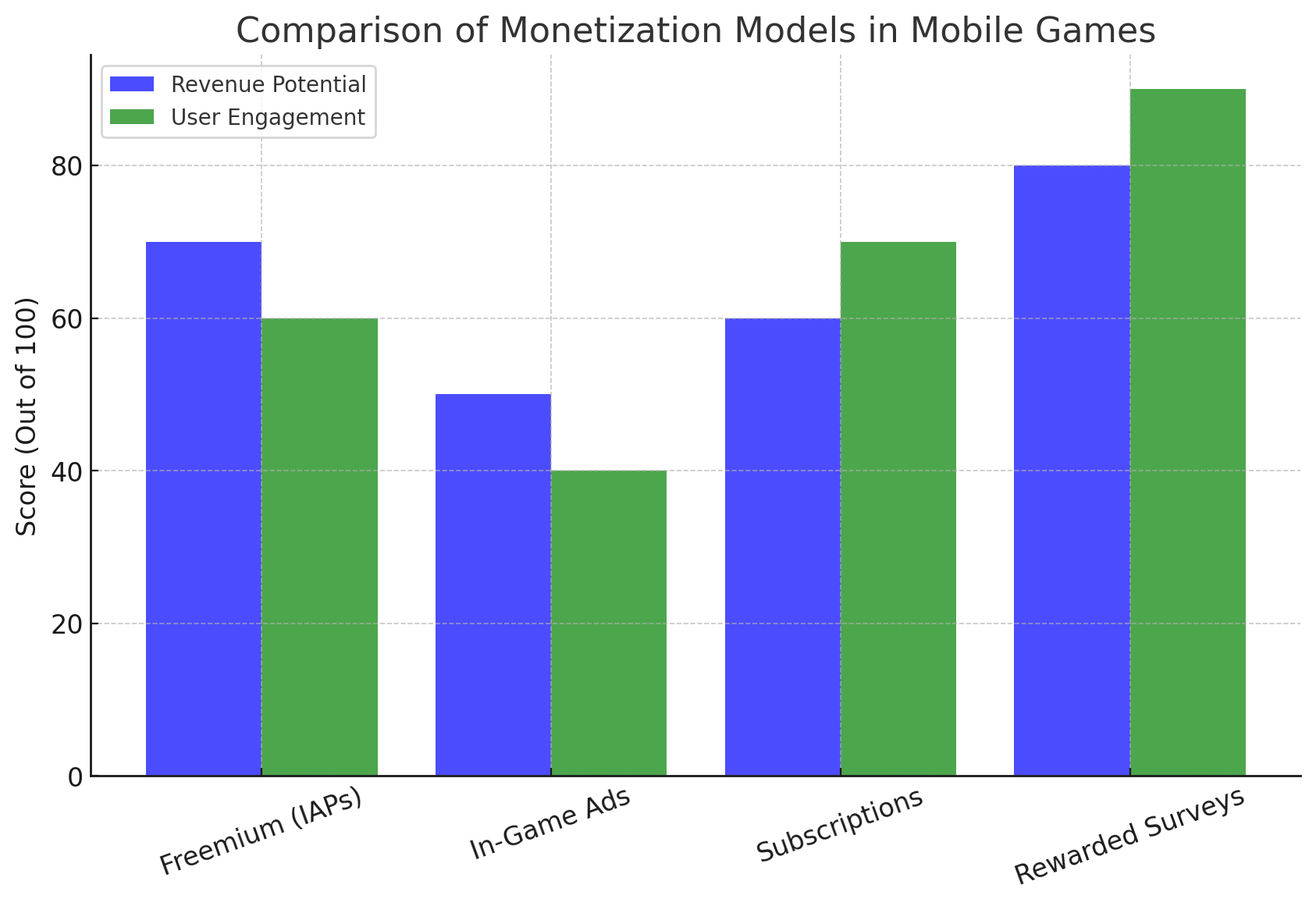
To understand why rewarded surveys are a strong monetization model, let’s compare them with traditional monetization strategies in terms of revenue potential, user engagement, and impact on gameplay.
| Monetization Model | Revenue Potential | User Engagement | Impact on Gameplay |
|---|---|---|---|
| In-App Purchases | High (for paying users) | Low (limited to paying users) | Can create pay-to-win scenarios |
| In-App Ads | Medium | Medium | Can interrupt gameplay |
| Subscription Model | High (if adopted widely) | High | Requires commitment from users |
| Paid Downloads | Low | Low | Limits user acquisition |
| Rewarded Video Ads | Medium | High | Can be intrusive if overused |
| Rewarded Surveys | High | High | Non-intrusive and interactive |
As shown in the table, rewarded surveys provide high engagement with minimal impact on gameplay, making them an ideal complement to existing monetization models.
How to Implement Rewarded Surveys in Your Mobile Game
1. Choose a Reliable Survey Monetization Platform
Selecting a trusted survey provider is essential for a seamless experience. RapidoReach, for example, offers a robust rewarded survey system that integrates easily into mobile games, allowing publishers to monetize non-paying players efficiently.
2. Define Reward Structures
Decide on the type of rewards that will appeal to your players. Options include:
- In-game currency
- Skins or cosmetic items
- Extra lives or boosters
- Access to exclusive game content
Tip: Ensure that the rewards are valuable enough to encourage participation but not so excessive that they devalue in-app purchases.
3. Integrate Surveys Without Disrupting UX
Surveys should be available at natural breakpoints in the game, such as:
✔ Between game levels
✔ After completing a mission
✔ Before unlocking a reward chest
4. Optimize for Mobile User Experience
Make sure surveys are:
✅ Short (1–3 minutes)
✅ Mobile-friendly
✅ Easy to access and exit
5. Track Performance and Optimize
Use analytics to monitor:
- Survey completion rates
- Player retention trends
- Revenue per user
By analyzing user behavior, you can adjust survey frequency and reward structures to maximize engagement.
The Future of Mobile Game Monetization with Surveys
With ad-blocking technology becoming more prevalent and user tolerance for traditional ads decreasing, rewarded surveys are set to play a bigger role in mobile game monetization.
Trends that will shape the future include:
✅ AI-Driven Personalization
AI-powered algorithms will match users with highly relevant surveys, increasing completion rates and engagement.
✅ Blockchain-Based Surveys
Cryptocurrency-based rewards may become a viable alternative to traditional in-game currency, offering new monetization possibilities.
✅ Deeper Brand Integrations
Expect to see more brands collaborating with game developers, using surveys to engage players in meaningful ways.
Conclusion: Why Mobile Publishers Should Leverage Rewarded Surveys
Monetizing mobile games effectively requires a mix of strategies, and rewarded surveys have emerged as a powerful, non-intrusive, and high-revenue solution. They offer a win-win scenario—players receive valuable rewards while publishers generate revenue from non-paying users.
By partnering with a leading survey provider like RapidoReach, mobile game publishers can maximize earnings, enhance player engagement, and future-proof their monetization strategy.
Want to Monetize Your Game with Rewarded Surveys?
RapidoReach makes it easy to integrate rewarded surveys into your mobile game, ensuring maximum revenue while keeping users happy.
🔹 Increase player retention
🔹 Generate revenue from non-paying players
🔹 Deliver a non-intrusive monetization experience
Start monetizing smarter today with RapidoReach Rewarded Surveys! 🚀
Frequently Asked Questions (FAQ)
1. What are rewarded surveys in mobile games?
Rewarded surveys allow players to complete short surveys in exchange for in-game rewards such as coins, power-ups, or special items. These surveys help mobile game developers generate additional revenue while providing players with an alternative way to earn rewards.
2. How do rewarded surveys benefit mobile game publishers?
Rewarded surveys provide an additional revenue stream, enhance player retention, improve user experience, and offer valuable insights into player preferences without disrupting gameplay.
3. Are rewarded surveys better than traditional ads?
Yes! Unlike traditional banner or video ads, rewarded surveys are opt-in, meaning they do not disrupt gameplay. Players voluntarily complete surveys for rewards, making them a more user-friendly monetization method.
4. How much revenue can publishers generate from rewarded surveys?
The revenue potential varies, but rewarded surveys typically pay 10-20 times more than display ads. Earnings depend on survey completion rates and audience engagement.
5. Can rewarded surveys be used alongside other monetization models?
Absolutely! Rewarded surveys complement other monetization methods such as in-app purchases and rewarded video ads, allowing developers to maximize earnings from all player types.
6. Which mobile game genres benefit the most from rewarded surveys?
Rewarded surveys work best for casual, puzzle, RPG, strategy, and simulation games where users have natural pauses and breaks to engage with survey opportunities.
7. How can I get started with rewarded surveys?
The easiest way to implement rewarded surveys is by partnering with a trusted survey provider like RapidoReach. They offer seamless integration, high payouts, and compliance with global data privacy regulations.
RapidoReach Monetization
Turn your app traffic into real revenue
Join 2,000+ publishers already boosting ARPU by up to 40% with in-app surveys. No SDK headaches — integrate in minutes.
Written By
Rachel Mandex
March 18, 2025