
How Can Mobile Game Publishers Monetize With Surveys, and What Are Some Use Cases?
Discover how mobile game publishers can effectively monetize through surveys and explore various use cases to maximize revenue and engagement.
How Can Mobile Game Publishers Monetize with Surveys? Top Strategies & Use Cases
Mobile gaming has become a multi-billion-dollar industry, attracting millions of players globally. However, the true challenge lies in effectively monetizing these games while maintaining a fun and engaging user experience.
Traditional models like in-app purchases and ads are popular, but they don’t always yield the highest revenue or the most satisfying experience for users. One strategy that has been gaining traction is survey-based monetization.
This article explores how mobile game publishers can integrate surveys into their monetization strategy, the benefits of doing so, and real-world use cases. By the end of this post, you'll understand why rewarded surveys are a powerful tool in game monetization and how you can leverage them to maximize your revenue.
The Mobile Game Monetization Landscape
Before diving into how surveys work in monetization, it’s important to understand the different methods mobile game developers currently use to generate revenue.
In-App Purchases
The freemium model is the most common monetization strategy for free-to-play mobile games. This model allows players to download and play the game for free while offering in-app purchases (IAPs) for additional features, levels, or enhancements.
While this model can be highly profitable, its effectiveness largely depends on the game’s design and its ability to engage players.
Challenges with In-App Purchases
While IAPs can drive revenue, not all players are willing to spend money on in-game purchases. Moreover, some genres, like puzzle or casual games, don’t have enough depth to encourage spending, making it harder to generate meaningful revenue.
In-App Advertising
Another popular monetization strategy is in-app advertising. Ads, such as banner ads or interstitial ads, are displayed to players during gameplay. Publishers are paid every time an ad is shown or clicked. This model works well for mobile games that have a large user base. However, it has its downsides:
- Player Frustration: Frequent ads can interrupt gameplay, causing frustration among users.
- Ad Blockers: Players may use ad blockers or choose to leave games with excessive ads.
Rewarded Ads
Rewarded video ads are a compromise between ads and in-app purchases. Players choose to watch ads in exchange for in-game rewards such as virtual currency, extra lives, or boosts.
This model has been widely accepted by users because it gives them a choice to engage with ads without being forced.
While rewarded ads are effective, there's an even more interactive option that mobile game publishers should explore: rewarded surveys.
The Power of Rewarded Surveys for Mobile Game Monetization
Rewarded surveys are surveys that players can participate in to earn in-game rewards. Instead of watching ads, players fill out a survey, and in return, they receive incentives such as currency, game boosters, or even new levels.
These surveys can range from simple questionnaires to more complex market research that collects valuable data about players’ preferences.
Why Should Mobile Game Publishers Consider Surveys?
Here are several reasons why rewarded surveys are a valuable monetization strategy for mobile game publishers:
- User Engagement: Surveys offer players a more interactive way to engage with your game. Instead of passively watching ads, they actively contribute by sharing their opinions or answering questions, leading to a more rewarding experience.
- Higher Revenue: Surveys can be a significantly more lucrative monetization method compared to traditional ads. Publishers can earn up to 20 times more from surveys than from banner ads, making it a highly profitable revenue stream.
- Non-Intrusive: Unlike traditional ads, surveys can be integrated seamlessly into the game without interrupting gameplay. They can be presented as overlays or in pop-ups at appropriate times, ensuring they don’t disrupt the user experience.
- Data Collection: Surveys allow game publishers to collect valuable data about their players, which can be used to improve the game and develop more personalized experiences.
- Player Choice: Players have the option to opt in or opt out of surveys, providing them with greater control over their gaming experience.
How Rewarded Surveys Work in Mobile Games
Rewarded surveys can be implemented in various ways, depending on the game’s design and the publisher's goals. The most common survey types include:
1. Basic Questionnaire Surveys
These surveys gather insights about player preferences, gaming habits, and overall feedback about the game. For example, a publisher might ask players about their favorite features or what they’d like to see improved in the game.
These surveys help publishers better understand their audience, tailor the game to their preferences, and improve user retention.
2. Play-Oriented Surveys
These surveys reward players for answering questions related to their gameplay experience. Players might be asked to rate a specific level or provide feedback on how a certain feature impacts their enjoyment. In return, they receive in-game rewards that can enhance their experience.
3. Basic Reward Surveys
These surveys typically offer players rewards for completing simple tasks, such as watching a short video, sharing the game on social media, or filling out a quick survey.
This model is ideal for boosting engagement and generating additional revenue without interrupting gameplay.
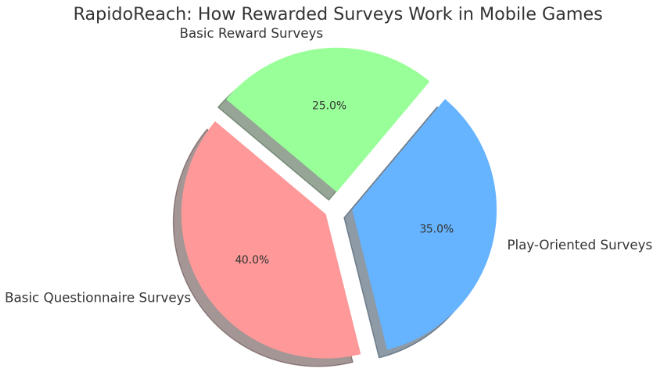
Basic Questionnaire Surveys (40%)
-
These surveys help publishers understand players’ preferences, habits, and feedback.
-
Example: A game might ask players which feature they like the most.
-
-
Play-Oriented Surveys (35%)
-
These surveys are integrated into the game flow, asking players to provide feedback about gameplay.
-
Example: Players might rate a level's difficulty or share thoughts on a new feature.
-
-
Basic Reward Surveys (25%)
-
These are simple surveys where players answer basic questions in return for rewards.
-
Example: General demographic or interest-based surveys to segment players.
-
Best Practices for Implementing Rewarded Surveys in Mobile Games
Integrating rewarded surveys into your mobile game can be highly beneficial, but it's essential to follow best practices to ensure a seamless and effective implementation.
1. Keep Surveys Short and Relevant
Players are unlikely to engage with lengthy surveys. Focus on creating short, relevant surveys that align with the player’s gaming experience.
For example, ask about specific in-game features, levels, or experiences rather than generic questions that might not resonate with the player.
2. Integrate Surveys Without Disrupting Gameplay
Surveys should be presented at natural points in the game where they don’t interfere with gameplay. This could be after completing a level, winning a match, or achieving a milestone.
The goal is to make the survey feel like a natural extension of the gaming experience rather than a disruptive force. RapidoReach SDK Integration.
3. Offer Meaningful Rewards
The rewards you offer should be valuable enough to incentivize players to complete the surveys. This can include virtual currency, exclusive content, game boosters, or even chances to win prizes. Make sure that the rewards align with the effort required to complete the survey.
4. Make Surveys Optional
Always provide players with the option to skip surveys. Some players may not want to engage, and forcing them to complete a survey could lead to frustration. By making surveys optional, you allow players to participate at their own discretion, leading to a more positive experience.
5. Monitor and Optimize Survey Performance
Track how your surveys are performing and optimize them over time. Use data analytics to measure completion rates, reward redemption, and user feedback. Continuously improve your surveys to keep them engaging and relevant to your audience.
Use Cases of Rewarded Surveys in Mobile Games
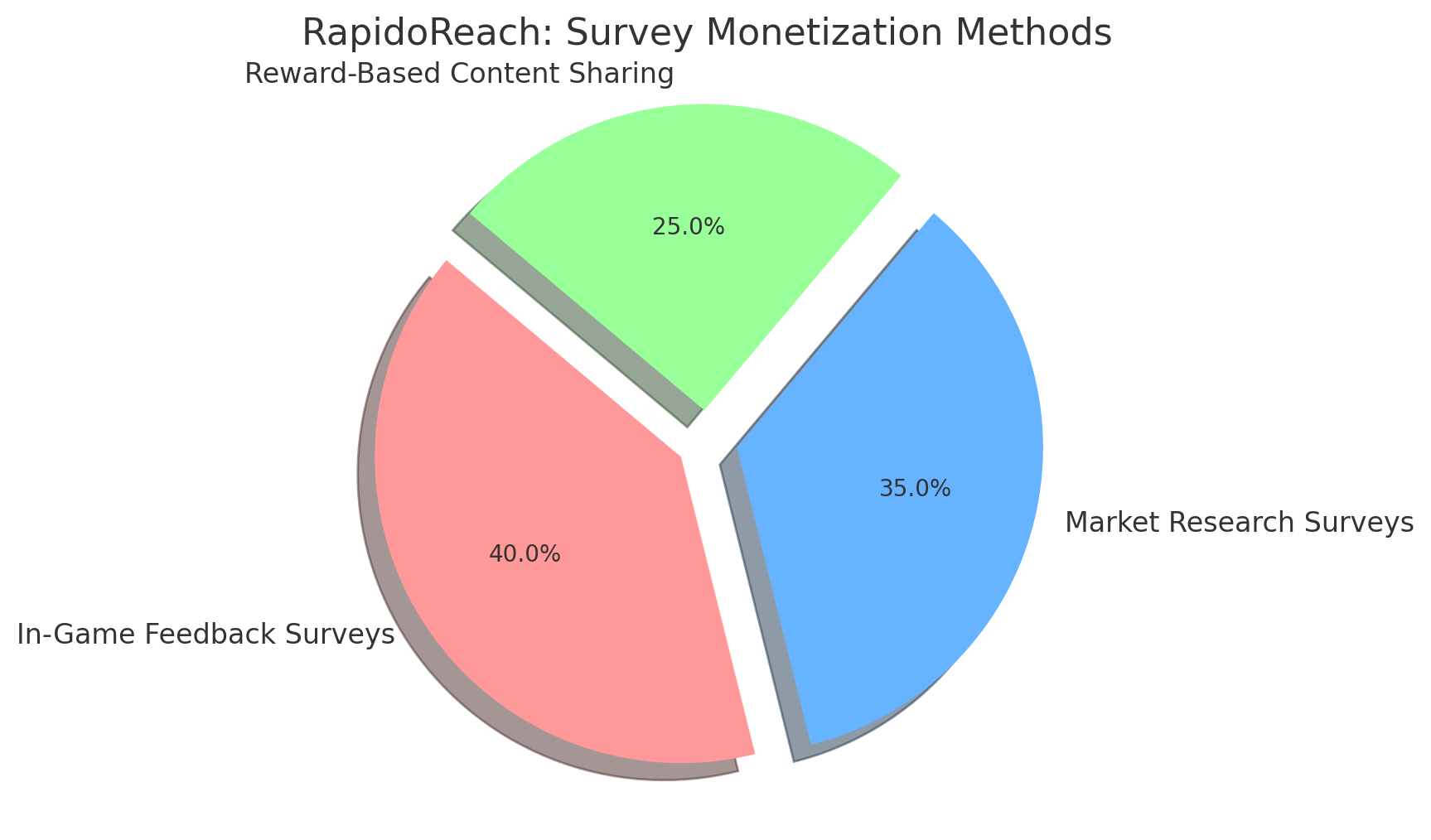
To better understand how rewarded surveys can benefit mobile game publishers, let’s look at a few use cases.
1. In-Game Feedback Surveys
Mobile game developers can use surveys to gather feedback about specific game features. For instance, after launching a new level or feature, publishers can prompt players to fill out a quick survey asking for their thoughts.
In return, players receive rewards like in-game currency, which keeps them engaged and happy.
2. Market Research Surveys
Game publishers can use surveys to conduct market research. For example, they can gather data on players’ preferences regarding game genres, spending habits, and gameplay styles. This data can be used to refine the game’s design and better target marketing efforts.
3. Reward-Based Content Sharing
Publishers can encourage players to share the game on social media in exchange for in-game rewards. Players are often more likely to promote the game if they feel they will receive something of value in return.
Conclusion
Mobile game monetization has evolved, and rewarded surveys have emerged as a powerful tool for developers. They offer a non-intrusive, interactive, and highly rewarding experience for players while generating significant revenue for publishers.
By integrating rewarded surveys into your game, you can enhance player engagement, gather valuable data, and ultimately increase your revenue.
If you're a mobile game publisher looking to optimize your monetization strategy, consider rewarded surveys as a key component of your approach. They’re a win-win solution that benefits both players and publishers.
Promote Your Monetization Strategy with RapidoReach
If you’re looking to take your game’s monetization to the next level, consider RapidoReach’s rewarded surveys offering. By integrating RapidoReach’s surveys into your game, you can earn more revenue and keep players engaged.
Learn more about RapidoReach's monetization options at RapidoReach.
RapidoReach Monetization
Turn your app traffic into real revenue
Join 2,000+ publishers already boosting ARPU by up to 40% with in-app surveys. No SDK headaches — integrate in minutes.
Written By
Andrew
March 18, 2025